waqas website almost complete
It is definitely possible to use a free website builder in 2026—if you are okay with some tradeoffs.
We spent the last month testing the free plans of website builders (and have been testing & reviewing website builders and their free plans in general for nearly a decade), and here’s the truth:
Website builders aren’t scrambling to give away something for free, but with a little research, you can make it work.
Overview
- Show All
- Website Builders Rankings


Optimize Your EHS Compliance
Stop struggling with manual processes. Our Best EHS Lets You Systems handle your safety and reporting architecture efficiently.
Request a DemoSquare Online is the best overall free website builder (and the best free ecommerce builder!).
And it’s despite the fact that Square Online doesn’t have the most features, the best templates, or the customizability of many other site builders in this list.
Pros
- Excellent Ecommerce Features
- Easy To Use
- Customer Support
- Sleek Free Subdomain Name
Cons
- Limited Customization
- Basic Features
Video Overview
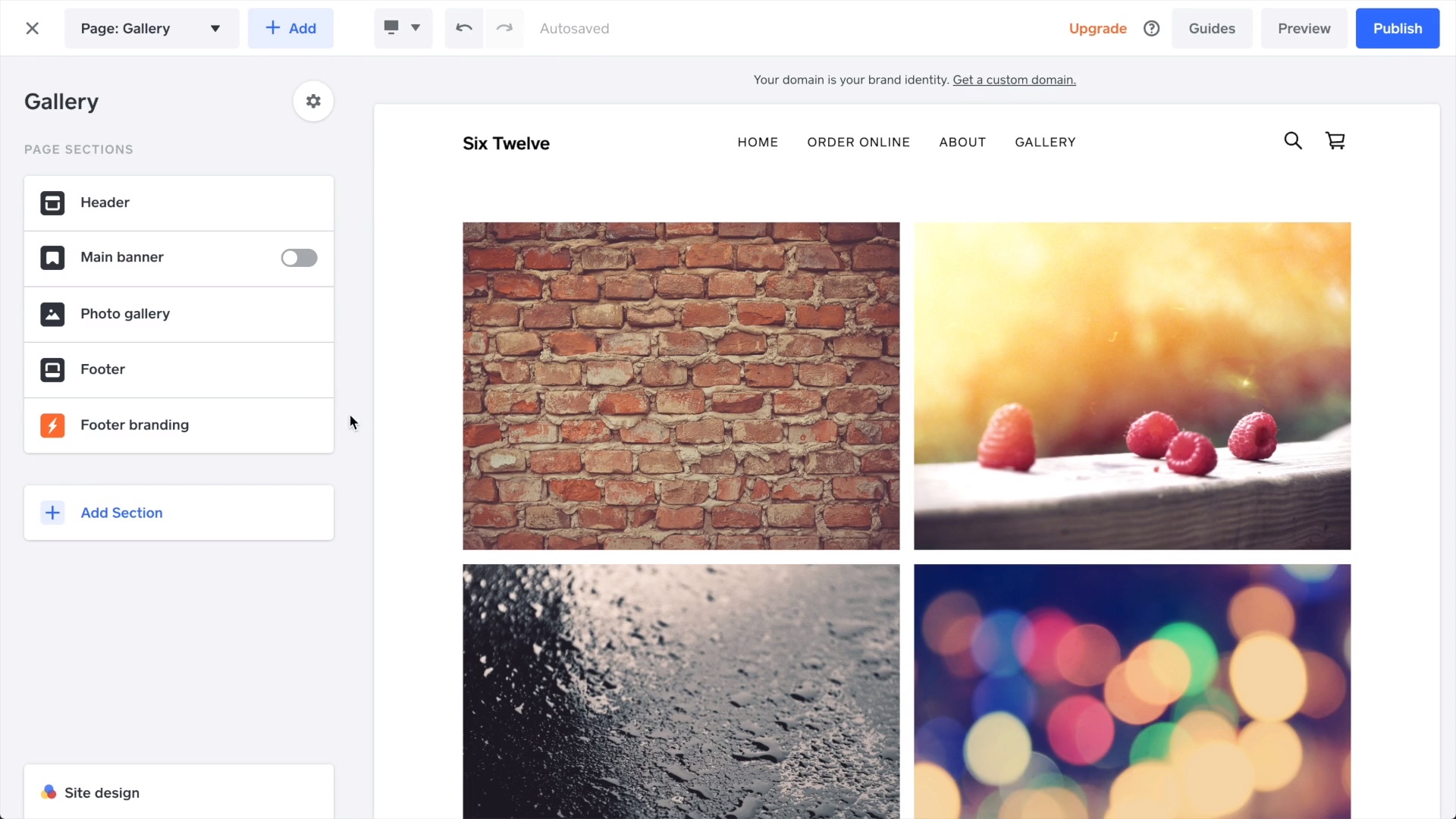

Overview of Square Online's free plans (1:18)
Demo Website
Two reasons Square Online is our top recommendation:
Generous free plan: The free Square Online plan includes many features, such as ecommerce, SEO tools, blogging, lead-capture forms, etc.
The website builder is just a part of the offering, and Square Online gives pretty much its whole website builder (previously Weebly) for free — you can use all the elements and sections and create unlimited pages.
The only thing you won’t have access to is its ‘advanced design controls’ feature.
No passive-aggressive tricks to get your money: All website builder companies want you to subscribe to a paid plan, and free plans are just a means to an end for most. So they employ passive-aggressive tactics that affect the result, i.e., the website.
The most common tactics website builders use to annoy users include irritating ads (example: free WordPress.com sites have page-covering ads both at the top and bottom), bad domain names (example: Wix’s free subdomain, username.wixsite.com/mysite, is not ideal), and limiting the essential features (example: Jimdo allows only five website pages).
Square Online, unlike most, gives a clean domain name, has a minimal ad, and packs most of the essential features with its free plan.
A great free plan is in Square’s best interest too
Our theory as to why Square Online’s free plan is superior to most is based on three separate sentences we found in shareholder letters of Block, the parent company of Square - the financial services platform that owns Square Online:
“We prioritized omnichannel product launches to help sellers transition to serving more of their customers online and through contactless commerce, including curbside pickup and delivery for Square Online and a website….”
Square is primarily a financial services company and a company behind the POS systems of many small retail businesses. When COVID hit, Square wanted to help retailers switch to ecommerce (without losing them to competitors like Shopify that also offer deeply integrated POS services). Therefore, they offered a generous free website & ecommerce plan and have still kept it.
“All online products have a free tier without a subscription fee, which we monetize only through transaction fees on payments.”
Even if Square offers the website builder for free, the company can earn revenue through transaction fees, i.e., its primary source of income. Fact: Square Online is primarily an ecommerce builder…but you can also use it for a website alone.
“We continue to focus on our three strategic priorities: omnichannel, growing upmarket, and expanding globally.”
Square Online helps the company achieve its goals of growing omnichannel, growing globally, and being accepted by bigger companies.
Advertisement
The free plan includes a small ad in the footer of your website:
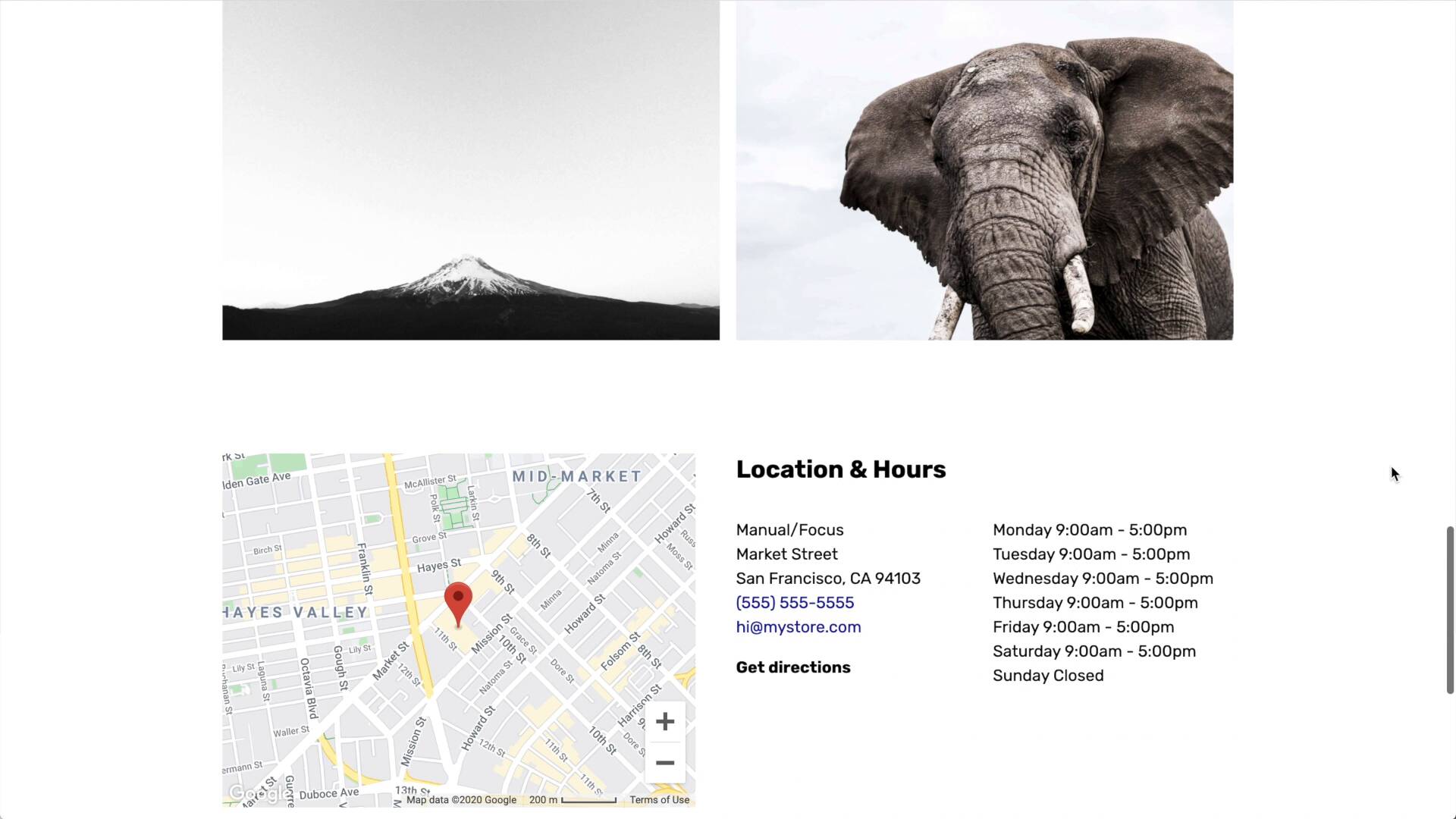
This ad is included on Square free websites.
Plans & Pricing
If you want to connect a custom domain or use its advanced design and ecommerce tools, you may want to switch to its paid plans.
Annual plans:
- Professional: $16/month
- Plus: $29/month
- Premium: $79/month
If you just want a website and are considering getting a paid plan later, we’d suggest you skip Square Online. For Square Online’s paid plan price, you can get the absolute best website builders (like Squarespace or Wix) — the ones with better templates, a lot more customizability, and superior website-building features.
In our best website builders comparison, Square Online comes out as pretty average.
Webflow is powerful but has a learning curve. It’s what we recommend if you would like to design your own theme from scratch.
Webflow is opposite to Square Online in the ease of use, customization, and features department. Webflow’s primary users are web developers and designers who want complete control over the website, so it’s highly customizable and consequently “difficult to use” for non-technical users.
Its free plan, though, is comparable to Square Online in terms of how much of the platform you can use.
The free Webflow plan is designed to help you learn how to use Webflow, so you can build a website using all fundamental Webflow functionalities. Plus, the Webflow ad and domain name are not annoying.
Unlike Square, though, Webflow has limits that push you to get the paid plan. For example, there’s a bandwidth limit and a CMS items limit; ecommerce is only available on the paid plan; etc.
Pros
- Design Your Theme From Scratch — Webflow gives you the flexibility of front-end coding without actually requiring you to code. Besides, you can also get one of the 1500+ Webflow templates if you don’t want to start from scratch.
- CMS — Webflow also includes a CMS in the free plan. This CMS lets you create custom content types called Collections. For example, you could create a Collection of articles that will automatically generate new pages for every new article.
- Good subdomain name — Each free Webflow site gets a websitename.webflow.io domain name.
- Minimal ad — There’s a fixed “Made in Webflow” ad at the bottom right that scrolls alongside, but it’s tiny and non-intrusive for the most part.
Cons
- Learning Curve — Webflow is not for beginners. You must first understand web design fundamentals to create a good website with Webflow.
- 1 GB bandwidth limit — This means Webflow will only send a total of 1 GB of data to website visitors every month. Depending on the size of the page and the number of pages each visitor scroll through, it roughly translates to only 100 to 500 monthly visitors being allowed on your Webflow site before you get a “bandwidth exceeded” notice.
- 50 CMS items limit — 50 CMS items would be good enough for you if you don’t want to continuously store content/collections on the database. However, if you want to use the free plan for something like blogging, you’ll hit the limit pretty soon.
Advertisement
Webflow includes a small ad that scrolls with your website. It’s not very noticeable.
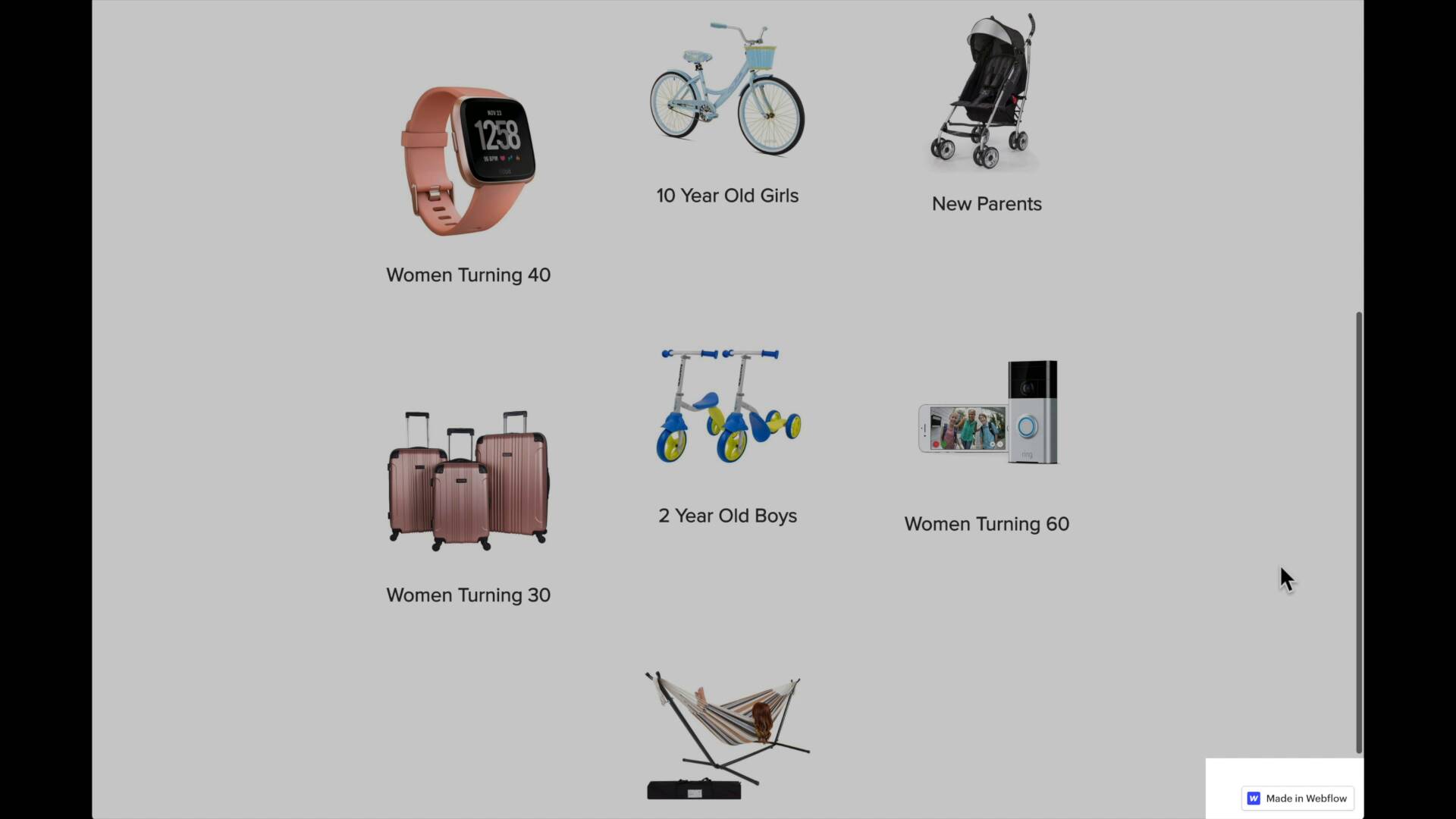
Webflow includes a small ad on free websites.
Video Overview
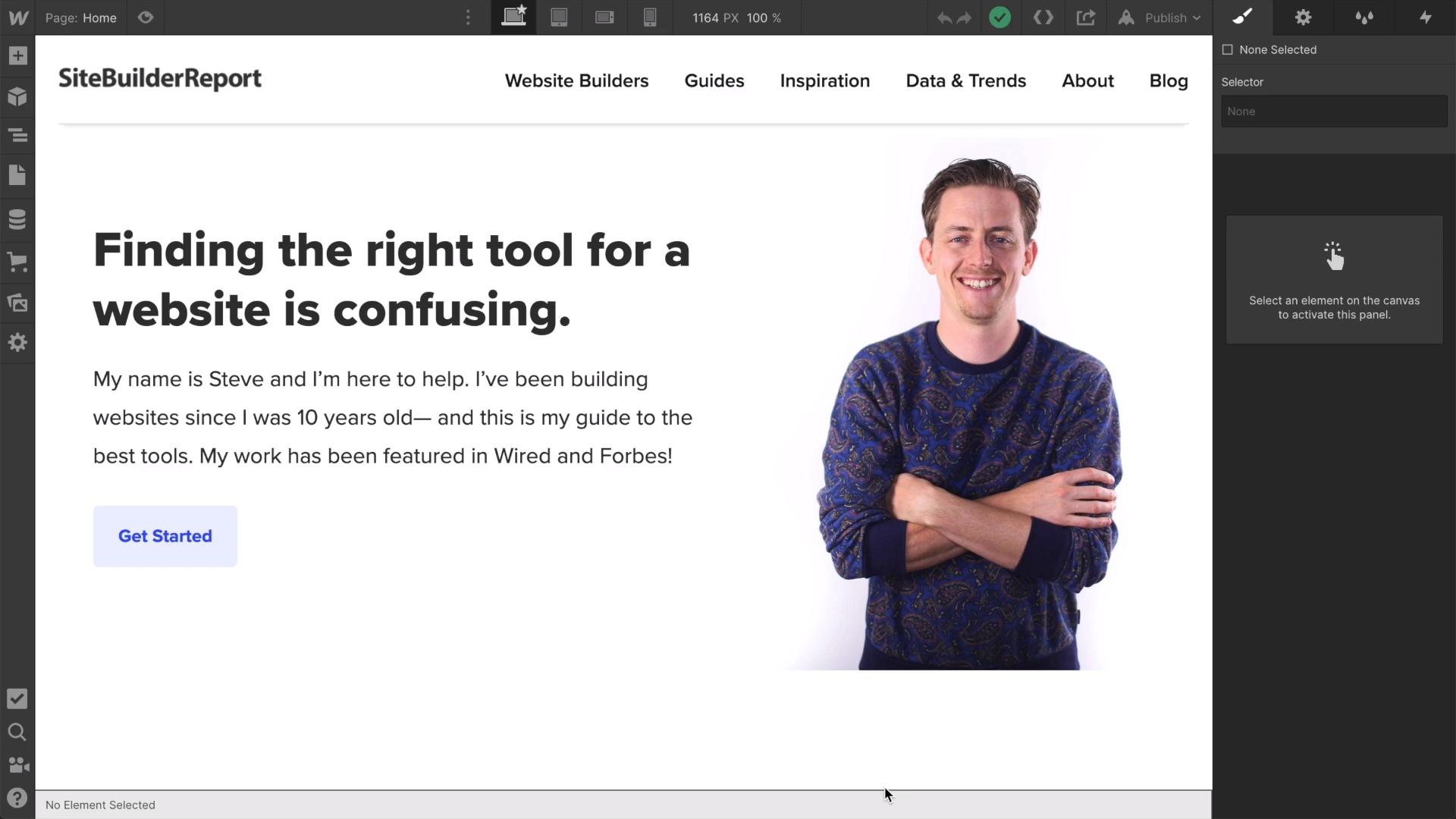
Overview of Webflow's free plan (1:26)
Demo Website
Plans & Pricing
Switch to a Webflow paid plan if you run out of bandwidth or CMS limit or need a custom domain.
Annual plans (General/website):
- Basic: $14/month. This does not include the CMS!
- CMS: $23/month
- Business: $39/month
Its ecommerce plans are separate.
Carrd is a website builder for one-page websites. It has an excellent free plan—so if you need a free one-page website, I’d recommend Carrd.
Carrd is an excellent option for things like landing pages, personal websites, link-in-bio pages, etc.
There are some limits, such as images/GIFs shouldn’t exceed 2 MB; you can only use 50 elements in your website; etc. However, these limits likely won’t disturb you unless you want a complex single-page website.
Pros
- Built For One-Page Sites — Unlike other website builders, Carrd is just for one-page websites. So themes and features are all purpose-built.
- Affordable — If you do decide to upgrade, you’ll find that Carrd is extremely affordable — it’s the cheapest website builder. Plans start a $9 per year. That is WAY, WAY cheaper than website builders with multiple pages, such as Squarespace or Wix.
- Customizable — There’s a wide variety of style customizations that you can make.
- Unnoticeable Ad — There’s just a tiny “(Made with Carrd)” text at the bottom of each free Carrd website. Also, the domain branding is clean: sitename.carrd.co
Cons
- No Multi-Page Functionality — You can’t create multiple web pages with Carrd.
Advertisement
Carrd includes an extremely small ad on free websites:
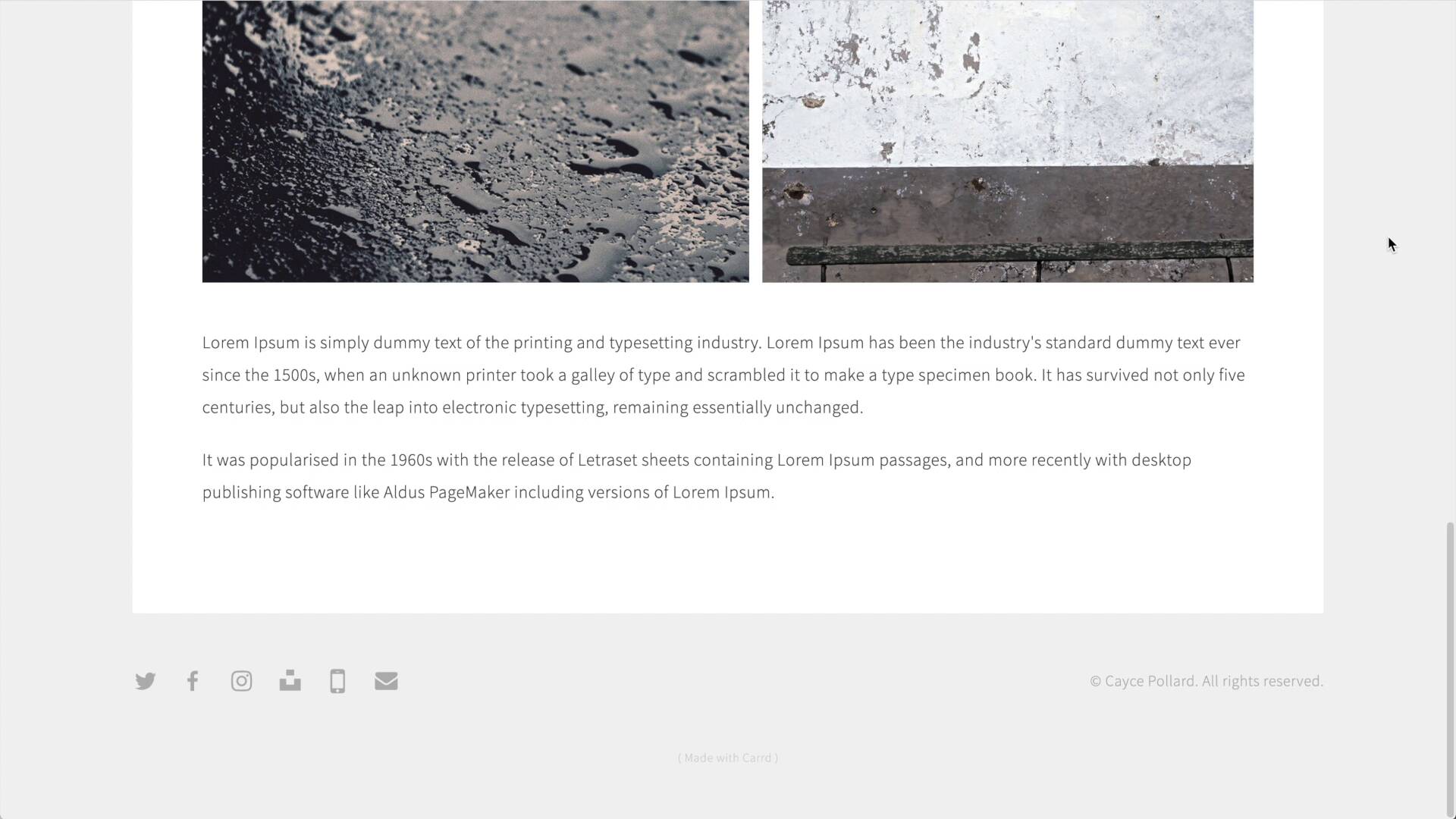
Most visitors probably won't even notice this ad.
Video
Demo Website
Plans & Pricing
You’ll likely want to switch to the paid plan for a custom domain or a feature like forms.
Annual plans:
- Pro Lite: $9/YEAR
- Pro Standard: $19/YEAR
- Pro Plus: $49/YEAR.
Bonus Suggestion: Canva
The graphic design tool company Canva launched a one-page website builder, Canva Websites, recently.
In our experience, it has some downsides, but it’s worth checking out (see our Canva Websites review. If you already have a paid plan with Canva, you can even host a Canva Websites-built website on your own domain!
Also, the websites made with Canva look gorgeous (compared to just practically-sound sites of Carrd) — see some of the Canva-made websites in our free website examples collection.
Google Sites is the only website builder that is 100% free. They don’t even offer paid plans.
If you don’t care much about your website, Google Sites can be a great option. It’s a good fit for student portfolios, internal help docs, a just-for-the-sake-of-it personal website, etc.
However, other options would be better if you want something pretty or professional. These are some of the best Google Sites websites we have found, and they won’t ever enter any of our best websites collection.
Pros
- Connect Custom Domains — It requires some technical understanding, but Google Sites lets you connect a custom domain name. It’s the only website builder on this list that lets you connect a custom domain!
- Integration With Google Products — One interesting thing is that Google Sites integrates well with other Google products like Google Calendar, Maps, Docs, Slides, Sheets, and Forms. Plus, you can restrict your website to users in your organization.
- No Ad — There’s a tiny ‘i’ icon at the bottom-left that reveals the site uses Google Sites if someone clicks it.
Cons
- Lame Themes & Theme Customization — The title says it all. There are 10-something basic templates you can use to make a lame website. Also, there are some pre-made “themes” that are basically the same layouts with different colors.
- No Blogging or Ecommerce — Features that are standard on other website builders are missing from Google Sites.
- Bad Free Domain — Your website will be on a sites.google.com/view/website/ domain, which isn’t appealing.
Advertisement
Ad isn’t even the right word. It’s more a scrolling icon that the visitor has to hover for more information. Here’s what it looks like:
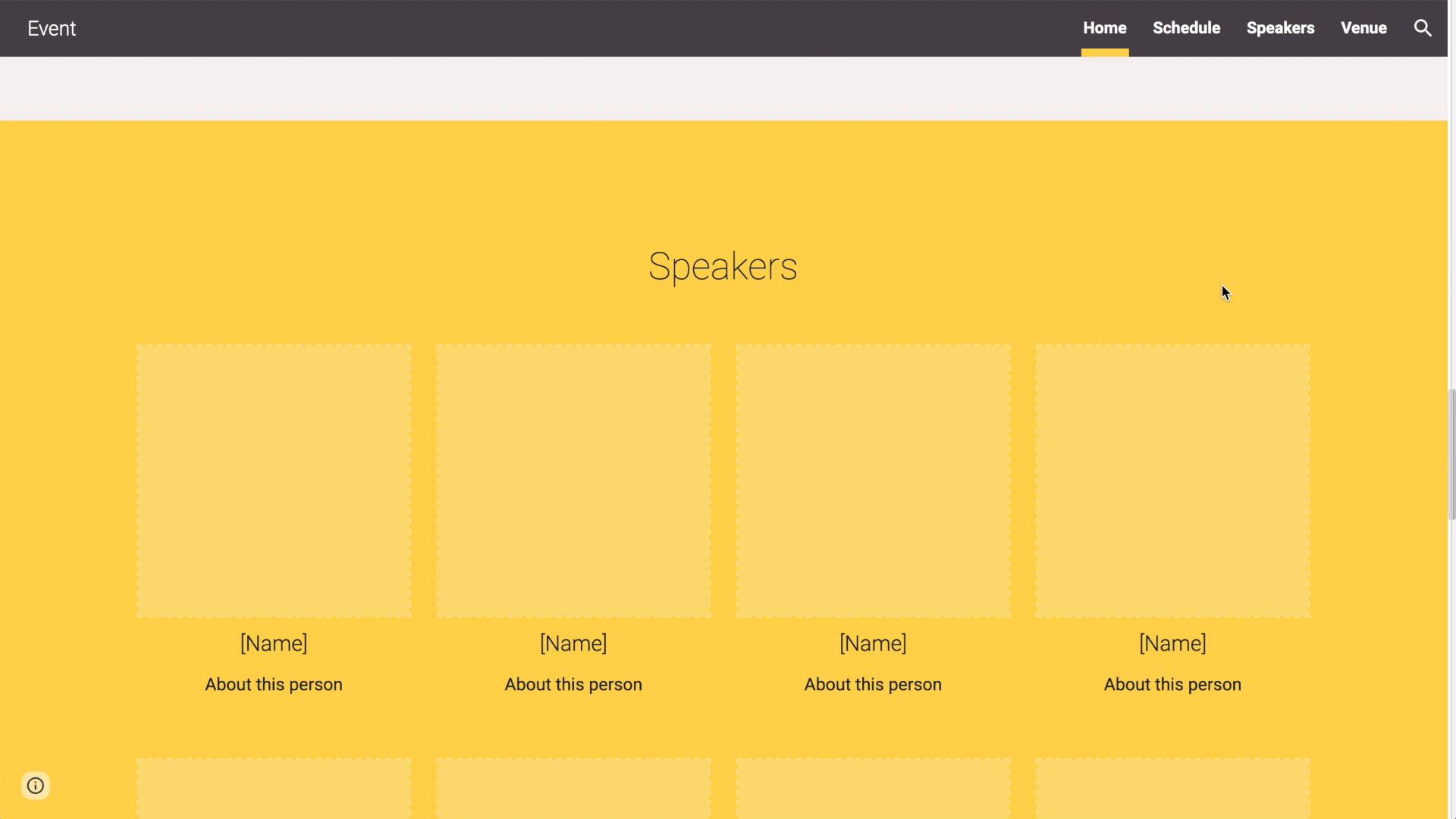
This is so small... I wish Google gave the option of removing it!
Video
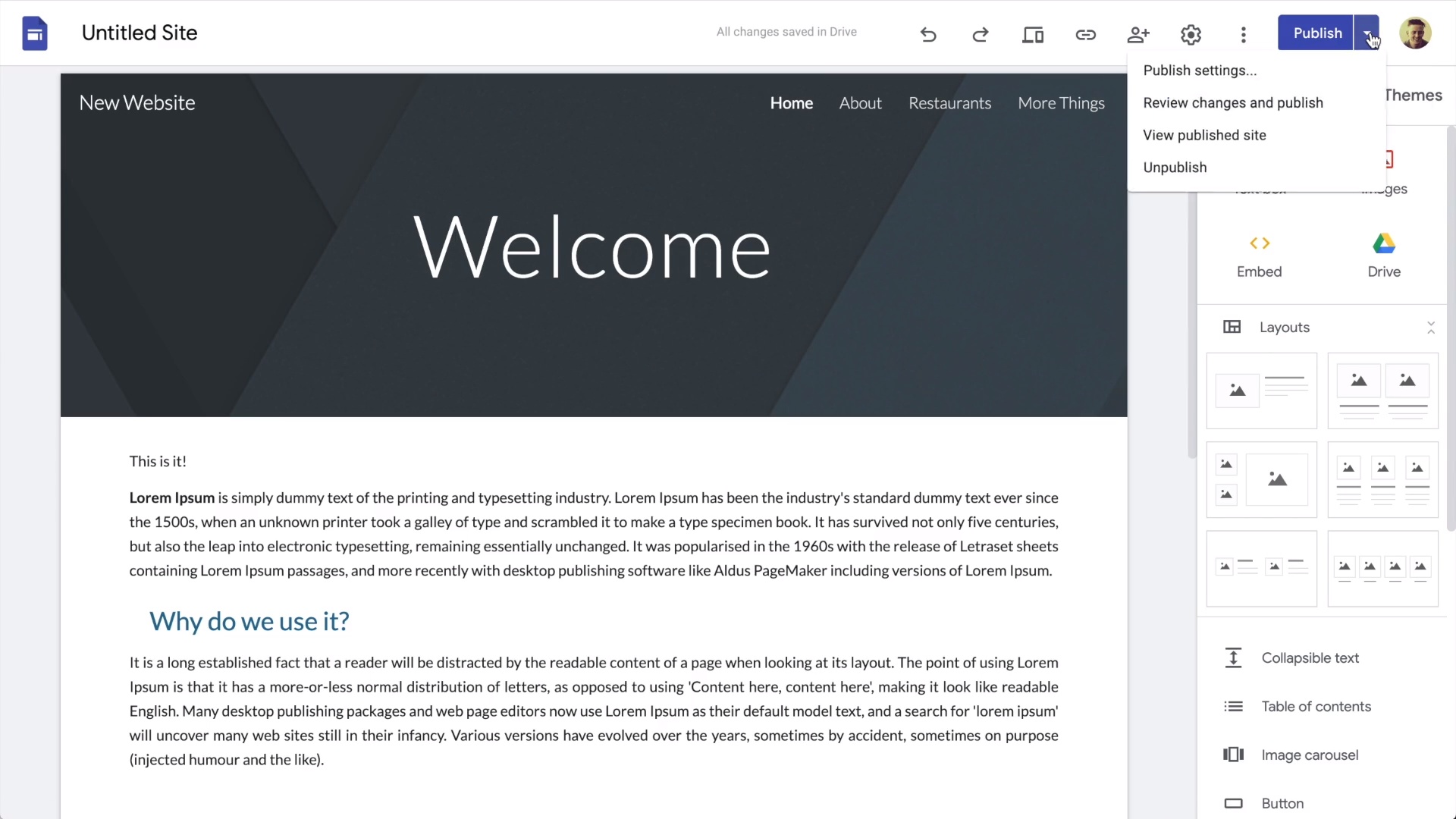
Overview of Google Sites
Demo Website
Show More Website Builders
Bandwidth & Storage Limits
To the best of our knowledge, these are the bandwidth and storage limits for each website builder’s free plan as of January 2026.
| Website Builder | Bandwidth | Storage | Other relevant limits |
|---|---|---|---|
| Square Online | Not Known | 500 MB | |
| Webflow | 1 GB | Not Known | 50 CMS items |
| Carrd | Not Known | Not Known | 50 blocks |
| Google Sites | Unlimited | Unlimited | |
| Jimdo | 2 GB | 500 MB | 5 website pages |
| GoDaddy | Not Known | Not Known | |
| Ucraft | Unlimited | Not Known | |
| IM Creator | 100 visits per day | 50 MB | |
| Strikingly | 5 GB / month | 500 MB | |
| Wix | 500 MB | 500 MB | |
| WordPress.com | Unlimited | 1 GB | |
| Site123 | 250 MB | 250 MB | Horrible, unchangeable URL |
| Hubspot | Not Known | Not Known | Horrible, unchangeable URL |
| Webnode | 1 GB | 100 MB |
About Free Niche Website Builders
All the website builders we tested are general-purpose website builders with free plans. However, depending on what you need the website for, you might find a good free niche website builder.
Here are some examples:
- For blogging, Medium is great!
- For a writer’s portfolio site, Clippings.me is a good option.
- For a wedding website, something like WithJoy can work. Here’s a sample free website: https://withjoy.com/sbr-and-test/
- If you are a designer/photographer who uses Adobe and is looking to build a portfolio, Adobe Portfolio might be free for you.
- Podia can be a good choice for people building communities and selling courses or digital products.
Tip: Custom Domain Name
This is a hack to add a custom domain name to your free website builder— even if it doesn’t allow them. It doesn’t work perfectly, but it gets you some of the way there.
Let’s say you built a free website on Square Online at yourwebsite.square.site.
You can actually register yourwebsite.com with a domain name provider such as Namecheap and set it to redirect to yourwebsite.square.site.
Now when visitors type in yourwebsite.com they are automatically forwarded to yourwebsite.square.site.
This isn’t a perfect solution— observant visitors will definitely notice the URL change in their browser— but it would let you put a domain name on your business card or Twitter bio.
Note: You will need to pay somewhere between $10 and $15 to get a domain name.
Frequently Asked Questions
What's the best non-free website builder?
How can I get a free domain name?
What about WordPress?
Does Google have a free website builder?
What is the easiest free website builder?
What is the cheapest website builder?
Can you make a free Squarespace website?
Is there a free version of Shopify?
Frequently Asked Questions
asfklasdjflasdjf
kljojihkhklj